
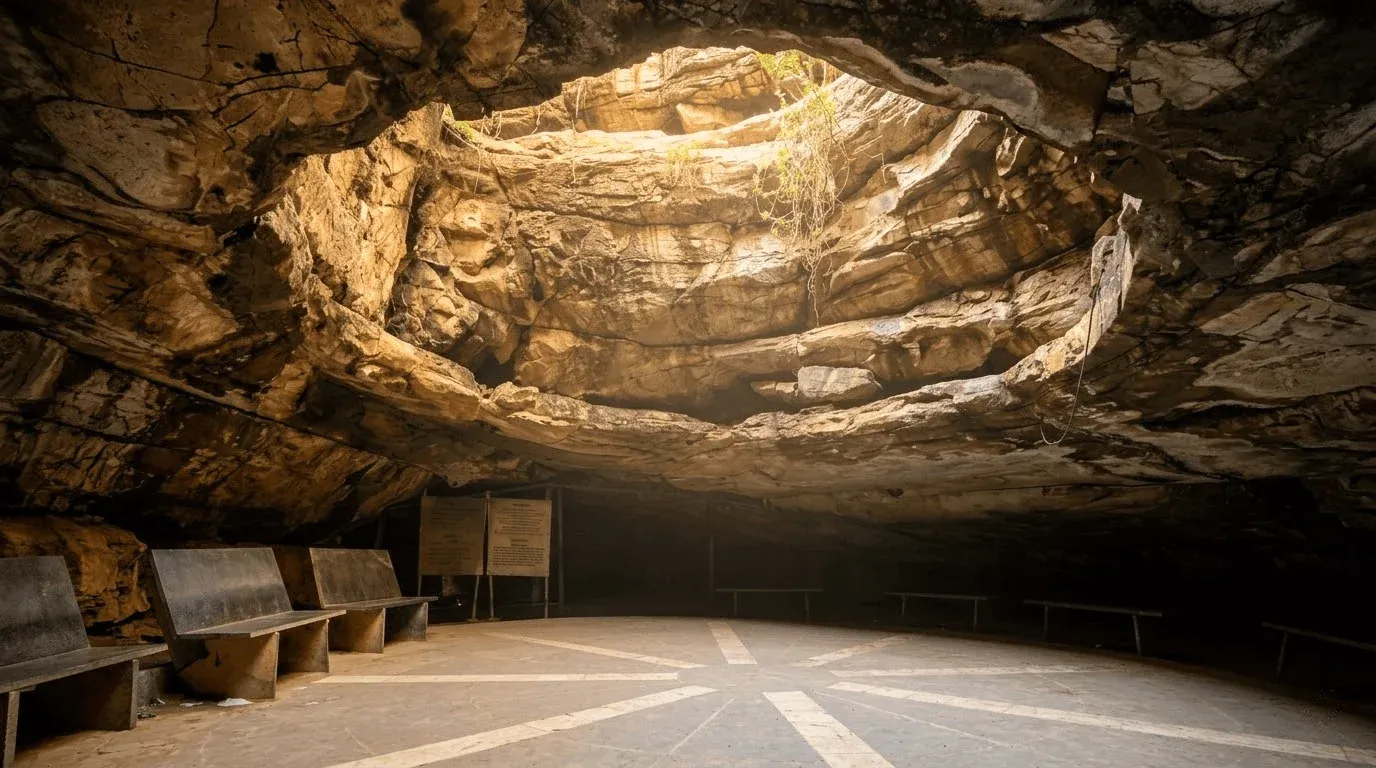
Belum Caves stand as one of India's most fascinating underground wonders, located in the Kurnool district of Andhra Pradesh. These magnificent limestone caves, formed over millions of years, stretch across 3.5 kilometers of underground passages with stunning stalactite and stalagmite formations. The caves' unique geological features, combined with their historical significance and natural beauty, create an extraordinary experience for visitors interested in exploring the mysteries of the earth's ancient underground landscapes.
Belum Caves
Underground Wonder of Andhra Pradesh
A Glimpse into History of Belum Caves
Ancient Geological Formation
Belum Caves were formed millions of years ago through the slow dissolution of limestone by underground water. The caves' intricate formations, including massive stalactites, stalagmites, and unique pillars, showcase nature's artistic mastery over geological time scales.
Historical Significance
Archaeological evidence suggests that these caves were inhabited by ancient humans thousands of years ago. Buddhist monks used the caves for meditation and shelter during the 1st century BCE, leaving behind ancient inscriptions and artifacts.
Modern Discovery
The caves were officially discovered and explored in detail by British geologist Robert Bruce Foote in 1884. Since then, they have been systematically studied and developed as one of Andhra Pradesh's premier tourist destinations.
Geological Marvels and Formations
Belum Caves showcase extraordinary geological formations that have fascinated scientists and visitors alike. The caves feature seven main chambers with impressive dimensions, including the "Patanala Gattu" chamber that stretches over 200 meters in length. The unique formations, such as the Thousand Pillar Hall and Musical Pillar, demonstrate nature's ability to create breathtaking underground sculptures through slow geological processes.
Underground River System
Eternal Underground Streams
The caves contain several perennial underground streams that continue to flow through the limestone formations, creating the stalactites and stalagmites. These water sources have been carving the caves for millions of years and still contribute to their ongoing formation.
Unique Ecosystem
The caves support a unique ecosystem adapted to darkness, including various species of cave-dwelling insects and microorganisms. The constant temperature and humidity levels create ideal conditions for these specialized life forms.
Exploration and Adventure
Belum Caves offer visitors the opportunity to explore one of India's longest cave systems through well-lit pathways and guided tours. The adventure of navigating through narrow passages, discovering hidden chambers, and witnessing unique geological formations creates an unforgettable experience. The caves' varying difficulty levels make them accessible to both casual visitors and serious adventure seekers.
Travel Guide to Belum Caves
How to Reach Belum Caves
By Air: The nearest airport is Hyderabad Airport, approximately 320 km from Belum Caves. Taxi and bus services are available from the airport.
By Train: Nandyal Railway Station is the nearest major railhead, about 60 km from the caves. Regular bus services connect Nandyal to Belum Caves.
By Road: Well-connected by road from Kurnool (110 km), Hyderabad (320 km), and other major cities.
Best Time to Visit
The ideal time to visit is from October to March when weather is pleasant and water levels in caves are optimal. The monsoon season (June-September) can cause flooding in some cave sections.
Local Attractions
Belum Reservoir: Beautiful reservoir near caves with boating facilities.
Mahanandi Temple: Ancient Shiva temple located 60 km from caves.
Yaganti Temple: Scenic temple with architectural significance.
Tips for Visitors
Wear Comfortable Shoes: Cave floors can be slippery and uneven.
Book Guided Tours: Recommended for first-time visitors.
Carry Light Jacket: Cave temperatures remain cool year-round.
Follow Safety Guidelines: Stay with group and follow marked paths.